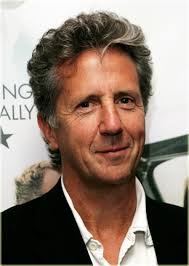
Asked about his
personality, who he was on stage, he contradicts himself so many
times that it’s easy to lose track. I have transcribed and analysed the whole thing
but here I concentrate on the parts that pertain to Stuart Lubbock’s
death.
Michael Barrymore's words are in purple; Stephen Nolan's in red; Gerry McCann's in blue; John Ramsey's in brown.
 |
| Stephen Nolan |
I thought I was ok.
This is a strange thing to say as it implies that for some reason with
this particular group of people he wasn’t ok. He’s sort of
shifted the onus onto them. As a group, or as individuals, they
somehow rendered him ‘not ok’. But Nolan didn't ask if he was ok; this is just how he has chosen to start his account. With himself.
Lots of people have
people back.
He remains adamant that
nothing happened to Stuart Lubbock at his house, that his injuries
were sustained elsewhere. He hopes that by taking the blame for this
one thing (inviting people, some of whom he didn’t know, home), he
can somehow dodge all the other accusations. And in a way he's right – if he hadn't asked these people back to his house, Stuart Lubbock would still be alive.
But who decided to ask
Stuart Lubbock back and why? Why was a woman deputised to do this? Did she intend to come too? Why do you ask strangers back, what’s the purpose? I’ll leave you
to figure this out. It’s not a completely random or the more the merrier type of thing as then Kevin Lubbock
would have been asked as well. But anyway, the point is, no one is saying he’s not
allowed to have people back – it’s him who’s decided that this
is the crux of the matter in order to evade the real issue.
 |
| Serious Barrymore |
Asking about this he
thinks gives him an air of responsibility – he doesn’t want to
commit a minor infraction without the permission of the presenter.
I was pissed.
This gets a nervous
giggle from the crowd. This is not good enough for Barrymore. He
wants to make them laugh. He hopes that if he can connect with them,
make them like him, he can get them back on-side.
That’s not swearing.
This signals his
attempt to outdo himself.
I was off my tits.
More nervous laughter.
He appreciates this and congratulates himself.
It’s getting better.
He means that he is finally
swearing and it’s true that the audience seems to warm to him but
only momentarily. He laughs and the people watching do too but they, unlike
him, haven't forgotten that Stuart Lubbock died. He’s merely
seeking to distract attention from this fact. This isn’t a laughing
matter and coming on TV and making lame jokes cannot alter that. In fact, it's simply disrespectful when talking about that night. What
these attempts at humour reveal is that he feels nothing for the
victim or his family.
Nolan points out that
he isn’t a normal person because of his fame and therefore should
be more careful about who he takes home. In a sense, he’s accepted
Barrymore’s deflection, that this was merely a case of unwise
hospitality.
I was gone and one guy
said I’ll be your security and went Yeah. Ok.
Omitting the personal
pronoun as he does before 'went' is a marker of someone who doesn't want to admit agency and is trying to fudge the issue. And then it's very vague – 'one guy' is who? Why not give the man's name and why doesn't Nolan ask it? And is he suggesting he needed protection from his own guests and that this 'one guy' didn't give it?
And come back and do
you know what I think deep down if I was being really honest here.
And why is he saying 'if I was being really honest here'? This suggests that he isn't being honest, just that it's possible that he might be at some stage..
 |
| Happy Barrymore |
And I’m comfortable
enough here to be honest.
Then hastily, when he
realises this implies he hasn’t been comfortable enough to answer
truthfully at other times, maybe any other time (let’s not forget
he refused to answer some questions at the
inquest), that this could be construed as an admission of mendacity,
he follows it quickly with:
Not that I haven't been
honest elsewhere.
But the cat is out of
the bag. It’s been recorded, broadcast and can't be unsaid or unheard. What we take from this is he hasn't been honest elsewhere.
But sometimes you know
with interviewers you close up because you get the thing oh where’s
this going and I’m not … I do and I’ll be honest and say that
to you now.
Hmm. Never trust anyone who has to continually assert they're honest (that's four times in quick succession). I'm still not sure what he actually means although Nolan says thank you. But, although he's volunteered honesty, he then starts to ramble about inconsequential stuff and you'd have to deduce that this is what he feels he can tell the truth about so is happy to hold forth about it.
But I think that
sometimes you know it’s a bit of the London boy’s done well you
know come from nothing no, you know, from family and showing off and a
bit you know it’s a big house, it’s a nice sound system …
Nolan thinks this
digression has gone on long enough as Barrymore has already spoken at length on the subject in the earlier part of the interview (not included here) and breaks in to ask:
What happened?
What happened?
Barrymore repeats the
question as if he has no idea what the man’s talking about, because
the death of Stuart Lubbock is of so little consequence to him that
he’s simply forgotten about it.
What happened?
Nolan has to remind
him:
Stuart Lubbock was found dead in your swimming pool.
Stuart Lubbock was found dead in your swimming pool.
Oh yeah yeah yeah.
This is said very
casually, in a rather offhand manner. He sounds like he's a little annoyed that he's been forced to return to the point. It’s almost disparaging and is possibly the most telling part of the whole interview, his attitude in these few words. It reminds me of John Ramsey's line about his daughter, JonBenet's murder: The real story here is not that a child
was murdered; the real story here is the unjust way we were treated. Seriously? This man has no sense of perspective. And notice that Barrymore doesn't correct or quibble with Nolan's words 'found dead in your swimming pool', which suggests that this was the case although later he says something that contradicts this.
Straight away he’s
introduced the ‘others’. As in the Martin Bashir interview, no
one asks who he means by this. Here he distances himself from them by
failing to name them and claiming he was also physically distant –
he was inside, the others were outside. It’s no coincidence that
Stuart was found outside, where Barrymore wasn’t. He’s
established that immediately.
They said Can they go
in the pool? Can they swim in the pool?
Again ‘he’ is not
part of them. And they are not named.
 |
| Aerial view of Barrymore's property |
So here’s a lot of
extraneous detail about where the switches are for the pool lights,
etc. Why does he feel the need to include all this as it affects
nothing? It’s done to delay him having to explain what happened or
embark on an untruth. He hopes that the fact that he’s telling the
truth about these patently insignificant things proves that he’s a
fundamentally reliable witness. He’s saying Look – all these
things are true. You can see them in the photograph (i.e. the photograph
corroborates my version of events). These are things he can declare
with certainty, that can be verified easily, so the public/police can
therefore trust his words/him. But are we really that stupid?
It also has the effect
of showing him to be a concerned host, an all-round good guy, putting
the lights on so that all his guests can see what they’re doing.
But which host would refuse to put the lights on? – it’s hardly
an effort. I’m calling this whole charade a smokescreen of truth.
Some of them went out
to there.
Them again, the
mysterious them and they are there, i.e. not with Barrymore. In some versions, the timeline is different as guests go to the jacuzzi before going for a swim. Again though, this is something quite crucial that Barrymore is pretty sketchy on.
There were four girls
there as well which the press very conveniently leave out.
He pauses here for
emphasis, believing the presence of girls proves it wasn’t the much-touted
gay orgy. But the girls might have been invited as 'beards' in order to
reassure Stuart that he would be safe, might even hook up with one of
the girls. If it had been Barrymore and eight men, he might not have
been that keen. The girls don't get named because Barrymore was not interested in them at all.
 |
| Interior of house |
Why does he get to
decide whether it matters or not? I would say it’s pretty important
as this guy could be his alibi. There must be a reason for the
failure to name him here as by the time of this interview he must
know the man’s name. Why doesn’t Nolan query this?
And then we went back
out.
To go back out, he
would have needed to be out at some stage. And by 'we', who does he mean? Himself and James Futers? The man he can't remember the name of? All three of them? How much time has elapsed? In all the interviews, there seems to be a leap, from getting shorts for his guests to wear to finding Stuart in the pool.
He said Do you wanna go
to the jacuzzi? I said Yeah ok.
Again, Nolan doesn’t
ask who the ‘he’ is in this instance. Barrymore makes it seem
like he’s just going along with what someone else suggests. More
avoidance of agency.
Went out. The other lot
had been out earlier.
‘Other lot’ is a
weird choice of words; it's slightly derogatory. It would be these 'others' who had been with Stuart. Still no names. Anybody reminded of the 'Others' from Lost yet?
When we went outside,
looked down and I didn’t even know Stuart’s name at the time. It
was just another member of the party, right?
He thinks he can prove
he wasn’t involved in anything if he claims not to know Stuart yet. But in fact, he's only admitted to not knowing his name, which is probably true.
Look down and he’s
there floating in the pool. Whether he’s down or at the top or
whatever.
He’s casual,
uninterested, vague but these details are crucial, as they would
tell us whether Stuart was dead when he entered the pool or whether
he drowned in the pool. And surely 'floating' means he was at the top? Why is Barrymore so unsure about this? We need to establish whether he was face down as the newspapers
say or face up as Barrymore has said elsewhere. If he was face down,
would Barrymore have recognised him? And what happened to 'we'? Now it seems like he was alone at this point. Notice he's missed out the personal pronoun again to fudge the issue.
 |
| Jonathan Kenney |
What did you do?
I run [sic]. What, me? The
first thing I do is run back into the house and get the … Jonathan
who I knew had [a] life-saving experience.
The change of tenses and an increase in ums, ers and pauses show that these are things Barrymore
is less certain of or knows are untrue. But why does he say 'get the'? This would seem to relate to an object rather than a person. And if Jonathan Kenney was the life-saver, why didn't he come out and jump in?
And the other guy
Merritt came with him.
So now Justin Merritt has become 'the other guy', with the implication that Barrymore did not know him well. And who is meant by 'him'? Kenney?
And James and er, Futers jumped in cause I can’t swim, jumped in and pulled him up and the other guy jumped in as well.
So now Justin Merritt has become 'the other guy', with the implication that Barrymore did not know him well. And who is meant by 'him'? Kenney?
And James and er, Futers jumped in cause I can’t swim, jumped in and pulled him up and the other guy jumped in as well.
Which other guy?
Merritt? Jonathan? Or the guy he can’t remember the name of? Other reports have named Simon Shaw. And whether he can or can't swim is also disputed.
I didn’t see that but
they jumped in to get him and I went to get (pauses). The other two,
they came out. They started working on him.
Who are the other two?
Why can’t he use people’s names? Again, what did he go to get? Why does he always stop short of saying it?
The other ones going
round. I was starting to freak out. The girls started screaming when
they saw he was just laying there. He wasn’t moving much.
I have no clue what 'The other ones going round' means. Justin Merritt has been labelled one of the others by Barrymore here and elsewhere. Has this been done deliberately to implicate him? Then if Stuart was
moving a little, he could still have been alive at this point although (see below),
it is more likely he was dead when Barrymore saw him.
 |
| Justin Merritt |
As we know now it was
Justin Merritt who called the ambulance (see previous blog for analysis of the 999 call transcript). But when? Why is this missing from this
account? And as I said in my previous blog, he was probably already
dead because Merritt says ‘A geezer’s drowned in the pool’. You
wouldn’t say ‘drowned’ of someone who was still alive.
[I’ve only recently
read an interview with James Futers, one of the guests who jumped in
to pull Stuart out, and he claims Stuart was lying at the bottom of
the pool. This would explain why Barrymore says here and has said elsewhere ‘I
looked down’. You would have to look down in order to see him if he
was at the bottom of the pool.] We know now that,
contrary to press reports, Stuart was face up not face down.
So how it was reported
is that you ran away.
Not straight ...
He’s about to say
‘Not straight away’ i.e. he did.
… One, I didn’t run
away. And first thing, they never report that I actually, the first
thing that I did was go and get help.
Ok, confronted with
this situation, who wouldn’t go for help? No one. Is he expecting
us to believe that in some version of these events, he would have
left Stuart floating in the pool? Does he expect kudos for calling for help? And the unsaid part is 'Then I ran away'. I think it could be more accurately described as 'fleeing the scene'.
But they choose not to
report those things.
Different they here: the media. A quick whinge from Barrymore, rather similar to the John Ramsey quote.
They were working on
him. I was standing there. And instead of going No. I should stay
here, I went with the lads down the bottom of the drive to their
flat.
You would expect him to
be able to name the people living at the bottom of the drive. One was
James Futers; the other Simon Shaw. But he calls them 'the lads' which is a friendlier term than 'the others'.
 |
| Mike Browne |
Why is this so
important to him? He’s trying to say he didn’t attempt to spin
the story but whether he called a PR/PA makes no real difference.
I had a PA who was my
personal assistant. I rang Mike. I said the guy’s in the pool. He’s
on the side of the pool. The ambulance has been rang [sic]. If the police
need me I’m in James’s place at the bottom of the drive.
Back to 'the guy'. Back to imprecise language. Is Stuart, sorry, 'the guy', in the pool when Barrymore makes the call or on the side of the pool? This is another point that needs clarification. If he was still in the pool, it would mean he called his PA before anyone called the emergency services.
It didn’t look good
you leaving the scene.
Absolutely not. No no.
It’s one of the worst things I could have done. And when it gets
reported and the way it’s been reported over the years as it has
been done (he’s flustered here and losing his way), it can’t look
right, can it? It can’t look right at all.
So he’s happy to
admit that this was the wrong thing to do and that it made him look
guilty but hastens to add:
But that doesn’t make
me guilty of something that never happened in the first place.
He gets a bit tripped
up here – he wants to assert the fact that he’s not guilty (of
something/anything) then remembers his story is that Stuart was not
injured at his house so has to add that the ‘something’ didn’t
happen at all. And if nothing ‘happened in the first place’, why
would he feel the need to run away? But Stuart is dead, something did happen. The post-mortems tell us what. More on the post-mortems here.
They wanted it to fit
the way they wanted it to fit. Instead of what the facts were.
This is the press
you’re talking about.
Yes, Barrymore has gone back to his bugbear, the press and got away from talking about Stuart.
You know the audience are going to be asking: Did he do it?
You know the audience are going to be asking: Did he do it?
Absolutely not. No way. No way did I do it.
Well, this is a very
assertive denial but it also admits that someone, if not Barrymore
himself, did do it. I think it would be more normal to say I didn’t
do anything to him.
Then there’s an
immediate turnaround, very similar to Gerry McCann’s (in blue), when asked if
he killed Madeleine:
No. And that’s an
emphatic no and if I did …
See Peter Hyatt on
this.
Here’s Barrymore:
And if I did I, you
know, I'd have put my hands up 10 years ago …
Let’s break it down.
And if I did …
So what we have here is
him immediately qualifying his denial: ‘No way did I do it … and
if I did’, in fact actually positing that he did do it. Why would he even say this, why speculate about what he
would have done if he’d killed Stuart? If you were totally
innocent, you would simply say ‘No’. So, is this an
acknowledgement, if not of his own guilt, of the guilt of someone at
the house? Then again break it down further and we have:
I did …
Embedded confession?
I you know …
A little bit of a delay
while he thinks how to respond, possibly realising he shouldn’t
have started a sentence with ‘And if I did’ …
… I'd have put my hands
up 10 years ago
He’s implying that
he’s an honest Joe (when he feels comfortable enough, remember) so
would have owned up at the time. Then he blusters, in a similar way to Gerry McCann’s:
Find the body.
Find the body.
While I’m here, who
is heartless enough to call their own child ‘the body’? And why
challenge the police to find the body?
There’s no evidence
there. Find the evidence.
See how similar this
is. Barrymore knows that his friends, his PA, have all been involved
in damage control, removing anything suspicious. But why make this
challenge at all? There’s a bit of 'duper’s delight' going on here, very similar to that evinced by Gerry McCann. I’m cleverer than the police – they won't find anything on me. Once
more, if he were innocent, he wouldn’t feel the need to mention
evidence. He would simply be horrified to be accused. He would want
to answer questions at the inquest as, if he didn’t do anything,
his cooperation would help clear his name.
 |
| Reeva Steenkamp and Oscar Pistorius |
Nothing happened to the
guy there.
Barrymore goes back to
‘the guy’. He’s no longer worthy of a name. Now he’s
suggesting that something could have happened to him elsewhere and we
know he’s trying to implicate emergency responders or hospital
staff.
He mentions the headline: You are a murderer. And asks:
How do you get round
that?
He wants to ‘get round’ this but can't think of
a way because there is no way round it if you did it.
And then:
How do you show
remorse?
You wouldn’t use the
word remorse if you weren’t guilty in some way. You would probably say
‘regret’. And ‘show remorse’ suggests an element of acting or
demonstrating. It’s important to him that the public recognise he’s
showing remorse.
How do you apologise
for things you haven't done?
He seems to believe
there is a need to apologise but also reiterates that he hasn’t
done anything. Giving him the benefit of the doubt, this is possibly
an attempt to evince compassion for Stuart’s family.
 |
| Terry Lubbock |
All the crap that I’ve
had to deal with.
This again is
disrespectful to Stuart Lubbock and his family. He’s saying that
Stuart’s death and the resulting suspicion are just some more crap
that he, Barrymore, has had to deal with, as if he shouldn’t have
to answer for that. It shows that disturbing lack of perspective I’ve
talked about elsewhere. His troubles cannot really compete with what
Stuart Lubbock suffered or what his family is suffering.
All the things that
happened.
Again this suggests he
had no agency, no responsibility – things just happened. See Oscar Pistorius: ‘the night the incident happened’; ‘the gun went
off’.
Then finally:
All the mistakes that I
made.
This is a partial
acceptance of blame but it would be fascinating to find out what he
considers ‘mistakes’ in this situation. Is he still only
acknowledging he was perhaps too generous a host? The other thing is
that it could be seen as diminishing Stuart Lubbock’s death to
nothing but a mistake.
I’ve got to look at
my part in it as well.
What part is he
going to own up to? He doesn’t say. So we’re left with his belief
that the only thing he did wrong was invite people back and of course
we’d have to be crazy to think this inviting people back was
anything he should feel guilty about, that it really was wrong. But exactly how has he looked at his part in it?*
So, although none of this is proof that Michael Barrymore had any part in causing the injuries that Stuart Lubbock suffered (defined by the judge who dismissed Barrymore's damages claim against the police as 'a violent assault, anal rape of a straight man'), it certainly raises questions about whether he is telling the truth as his statements reveal several markers of deceit, narcissism, reluctance, evasion, a refusal to be exact and a lack of empathy for everyone but himself, similar to traits shown by Oscar Pistorius. The problem is that he has never been properly called to account, never been required to fill in any of the gaps or explain any of the inconsistencies in his story, never really been properly interrogated. The police need to look at these interviews and ask the right questions. This has to happen (and if Barrymore is innocent he should willingly comply) if we are ever to learn the truth and Stuart Lubbock ever to find justice. My heart bleeds for Terry and Kevin Lubbock.

So, although none of this is proof that Michael Barrymore had any part in causing the injuries that Stuart Lubbock suffered (defined by the judge who dismissed Barrymore's damages claim against the police as 'a violent assault, anal rape of a straight man'), it certainly raises questions about whether he is telling the truth as his statements reveal several markers of deceit, narcissism, reluctance, evasion, a refusal to be exact and a lack of empathy for everyone but himself, similar to traits shown by Oscar Pistorius. The problem is that he has never been properly called to account, never been required to fill in any of the gaps or explain any of the inconsistencies in his story, never really been properly interrogated. The police need to look at these interviews and ask the right questions. This has to happen (and if Barrymore is innocent he should willingly comply) if we are ever to learn the truth and Stuart Lubbock ever to find justice. My heart bleeds for Terry and Kevin Lubbock.

Always remember the victims
Justice4Stuart
RIP Stuart Lubbock
*For a case that seems similar, see Joey Comunale.
*For a case that seems similar, see Joey Comunale.